Banaras Culture: Music, Language, Philosophy and the Banarasi Spirit
The Banarasi masti — a philosophy of life that is uniquely, irreducibly from Kashi
Varanasi has a culture so distinctive that it has its own word: 'Banarasi.' To be Banarasi is to have a particular relationship with life — a spirit of 'masti' (a word somewhere between joy, intoxication, and carelessness about convention) combined with deep learning, wit, and an unshakeable self-confidence rooted in living in the most sacred city on earth. This culture expresses itself in music, language, food, philosophy, wrestling, and the thousand small traditions that make Varanasi genuinely unlike anywhere else in India.
Hindustani Classical Music in Varanasi
Varanasi is one of the two great centres of Hindustani classical music in India (the other being Lucknow) and the birthplace of the Banaras Gharana — the Varanasi school of music, particularly associated with thumri (the romantic devotional vocal form) and tabla.
The Banaras Gharana of thumri was developed in the late 18th and early 19th centuries and is associated with a particularly emotional, earthy, and improvisatory style, in contrast to the more formal Agra or Jaipur schools. Ustad Bismillah Khan — the great shehnai maestro and national icon — was from Varanasi and played at the Kashi Vishwanath Temple for decades. Pandit Kishan Maharaj (tabla), Girija Devi (thumri), Ravi Shankar (sitar, though Maihar gharana) — the connections between Varanasi and the greatest names in Hindustani music are numerous.
The Sankat Mochan Sangeet Samaroh at Sankat Mochan Temple (March–April annually) is the most important classical music event associated with the city — five nights of continuous performance, free and open to all. The Shivratri celebrations at various venues also feature all-night classical music.
The Banarasi Language and Wit
Banarasis speak a distinctive blend of Hindi and Bhojpuri (the regional language of eastern Uttar Pradesh and western Bihar) that has its own idioms, proverbs, and cultural references. The Banarasi version of Hindi is particularly rich in terms related to religious practice, food, and the city's unique social life.
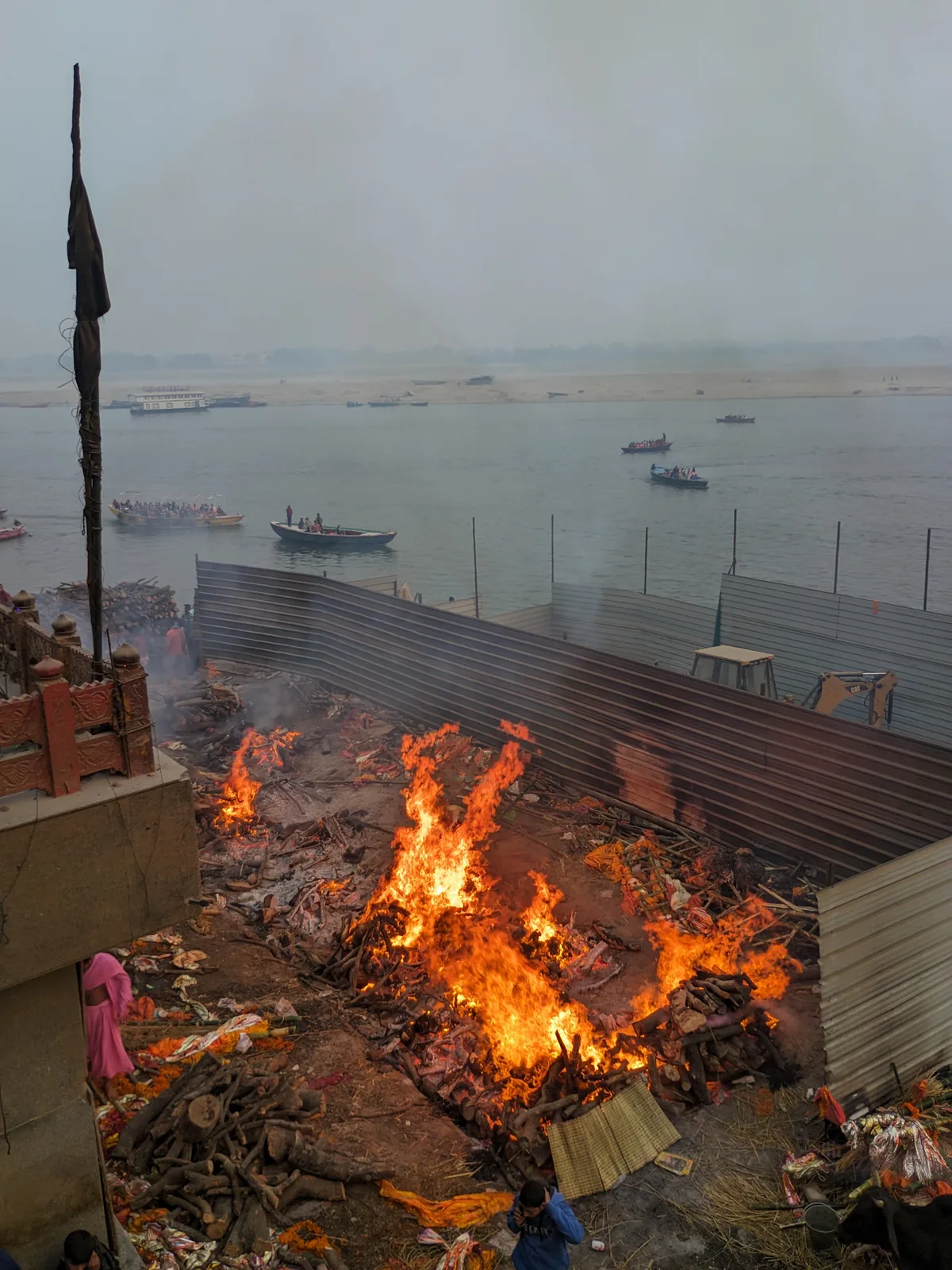
Baranasi wit (Banarasi boli) is renowned — a dry, ironic humour that refuses to take anything too seriously, including sacred subjects. The many Banarasi jokes and sayings about city life reflect a culture that has absorbed the full weight of human mortality (literally — the cremation ghats are part of the landscape) and decided to respond with lightness rather than gravity.
Many of India's great literary figures have been Banarasi by origin or adoption: Munshi Premchand (novelist), Harishankar Parsai (satirist), and various 19th and early 20th century Urdu and Hindi writers who found Varanasi's particular mixture of Sanskrit learning, vernacular culture, and cosmopolitan religious life a uniquely fertile environment.
Akharas: The Varanasi Wrestling Tradition
Varanasi has a strong and ancient tradition of kushti (Indian wrestling) — practised at akharas (training gymnasiums) that date back several centuries. The Tulsi Ghat area and the old city have multiple active akharas where wrestlers train from pre-dawn every morning.
The Varanasi wrestling tradition is intertwined with religious practice — many wrestlers are devotees of Hanuman, and strength is understood as a form of tapas (spiritual discipline). The akharas are simultaneously athletic clubs, community centres, and spiritual spaces. Visitors can observe morning training sessions at some of the akharas near the ghats with appropriate permission.
Frequently Asked Questions
Where can I hear live Hindustani classical music in Varanasi?▼
The Sankat Mochan Sangeet Samaroh (March–April) is the most prestigious opportunity. Year-round, several venues and programmes exist — Spirit of Kashi can arrange evenings with classical musicians. The ghats themselves sometimes host informal performances. The Hotel/guesthouse in the Assi Ghat area often has cultural programmes.