Panchganga Ghat Varanasi: Sacred Confluence of Five Rivers
Where five sacred rivers are believed to converge — a site of layered religious history
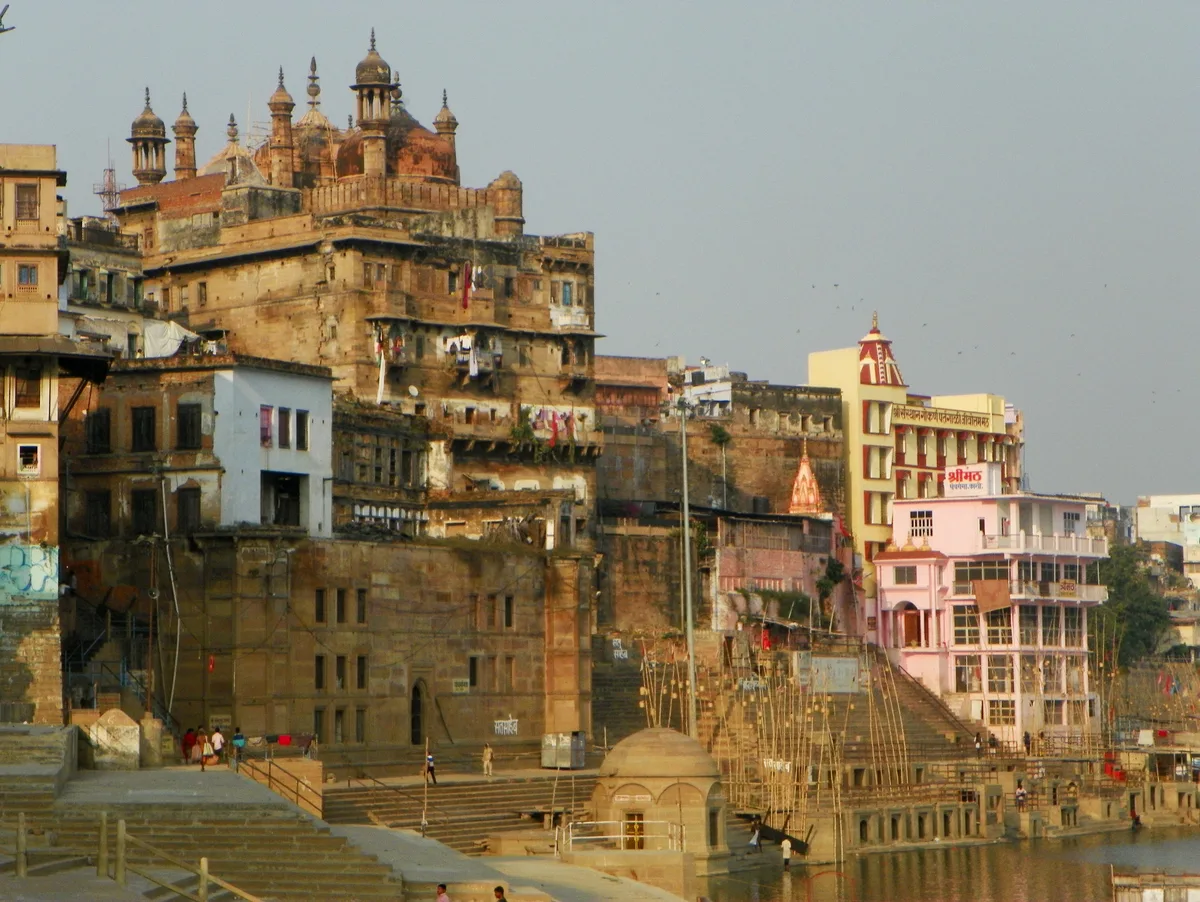
Panchganga Ghat — the ghat of the five rivers — is one of Varanasi's most historically layered sacred sites. The name comes from the belief that five rivers converge here: the Ganga (physically present), and four mythological rivers — Yamuna, Saraswati, Dhutapapa, and Kirana — believed to flow underground and merge at this point. The ghat is also the site of the Bindu Madhava temple, a major Vishnu shrine, and the Alamgir Mosque built by Aurangzeb on the original temple's ruins — a visible, living reminder of the city's complex history.
Sacred Geography: The Five Rivers
In Hindu sacred geography, rivers can be physically present, or they can flow at a subtle, spiritual level — invisibly threading through the earth to emerge at sacred points. The tradition of five rivers meeting at Panchganga Ghat describes the sacred Yamuna (visible at Prayagraj 100 km west), the underground Saraswati (believed to flow beneath the Gangetic plain), and two purely spiritual rivers, Dhutapapa ('cleanser of sin') and Kirana ('ray of light'), as all joining the Ganga at this point.
The result is that bathing at Panchganga Ghat is believed to give the merit of bathing in all five rivers simultaneously — a multiplication of spiritual benefit that makes it particularly significant for pilgrims. On Kartik Purnima (the full moon of the month of Kartik, typically November), one million lamps are traditionally lit at this ghat — one of the most spectacular night scenes in Varanasi.
Bindu Madhava Temple and Aurangzeb's Mosque
The Bindu Madhava temple at the top of Panchganga Ghat is one of Varanasi's most important Vishnu temples — a striking counterpoint to the city's overwhelmingly Shaivite character. The current temple dates from the late 17th–18th century, but occupies a site of much greater antiquity.
The Alamgir Mosque adjacent to the temple site was built by the Mughal emperor Aurangzeb in 1673 on the ruins of the original, larger Bindu Madhava temple, which he ordered demolished. This act is one of the most cited examples of temple destruction during the Mughal period and remains a sensitive subject in Varanasi. The mosque, known locally as Lal Khan ka Maqbara or the Aurangzeb Mosque, now stands next to the reconstructed temple — the two structures' physical proximity embodies centuries of religious history in a single view.
The famous medieval saint Kabir (15th–16th century), who preached a philosophy transcending Hindu and Muslim divisions, is associated with this area of Varanasi — his guru Ramananda had an ashram near Panchganga Ghat.
Frequently Asked Questions
Can visitors enter the Bindu Madhava temple at Panchganga Ghat?▼
Yes, the Bindu Madhava temple is open to Hindu devotees and generally accessible to respectful visitors. Entry to the inner sanctum follows the standard rules: remove shoes, dress modestly, no photography inside. The outer courtyard offers excellent views of the ghat and the adjacent mosque.
Why is Panchganga Ghat significant for the Kartik Purnima festival?▼
Panchganga Ghat is traditionally the most important location in Varanasi for the Kartik Purnima (Dev Deepawali) lighting. On this night, the ghat's distinctive wide steps are illuminated with hundreds of thousands of earthen lamps. Watching from a boat on the river gives the best view of the entire illuminated riverfront.