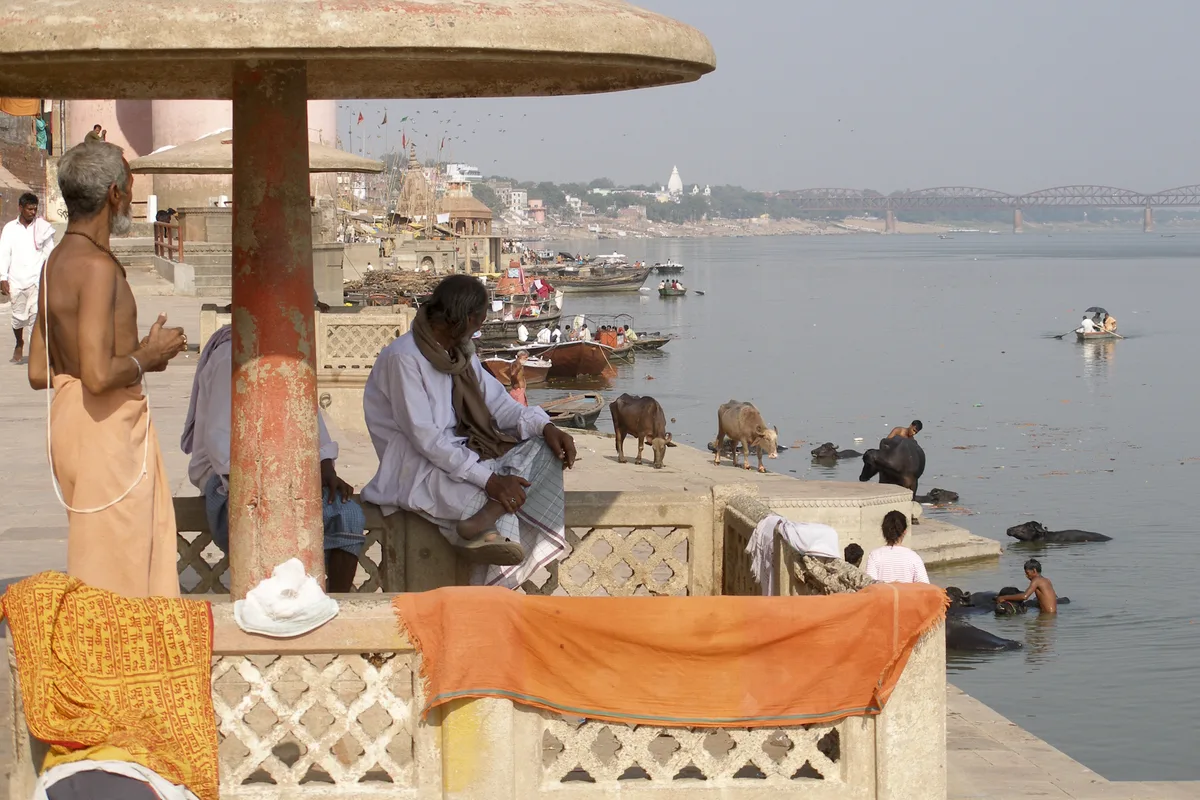
Varanasi 5-Day Itinerary: Deep Immersion in Kashi
Five days to know Kashi — not just to see it
Five days in Varanasi is the difference between visiting a city and beginning to understand one. The essential content of the first three days is covered at a more relaxed pace. Days 4 and 5 open the city's less-visited layers: the 18th-century Ramnagar Fort on the opposite bank, the handloom silk-weaving workshops of the old city, the quieter northern ghats beyond Panchganga, and the slower Varanasi that exists off the main pilgrimage routes. This itinerary is designed for travellers who have come specifically for Varanasi — not as a stop on a North India circuit, but as the destination itself.
Day 1: Arrive, Explore Assi Ghat, Evening Aarti
Arrive in Varanasi in the morning or early afternoon. Base yourself in the Assi Ghat area — with five days in the city, the quieter southern end is a better base than the central ghats area, which becomes crowded and loud in peak hours.
Afternoon: Walk to Assi Ghat and sit. Buy a flower offering from a vendor on the steps, set it in the river. Watch the afternoon activity: pilgrims performing rituals, students from Banaras Hindu University (BHU, whose campus borders Assi Ghat) walking to the river, boatmen waiting for clients. This first hour has no itinerary — its purpose is to let you arrive in the city before you begin moving through it.
Evening: Ganga Aarti at Dashashwamedh (take an auto, 15 minutes). With five days ahead, you can afford to watch from whatever position feels right — seated on the steps, standing on a boat, or from a ghat-side restaurant rooftop. After the Aarti, dinner in the old city lanes or near Assi Ghat.
Day 2: Sunrise Boat Ride, Kashi Vishwanath, Old City Deep Dive
Wake at 4:30 AM. Sunrise boat ride from Assi Ghat — with five days, you can do two different boat routes on different mornings. Day 2 route: south from Assi to north past Panchganga and Raj Ghat — the full length of the ghat corridor. The northern section beyond Manikarnika is significantly quieter than the central ghats.
Breakfast at a ghat-side stall. Walk to Kashi Vishwanath (or take an auto to Godaulia and walk). Arrive by 9 AM. The darshan of the Kashi Vishwanath Jyotirlinga deserves undivided attention — with five days in the city, you are not rushing away from it to reach the next item.
After the temple, enter the old city with a Spirit of Kashi guide for a thorough walk: not just the main lanes (Vishwanath Gali, Kachori Gali) but the neighbourhoods behind them — the weavers' quarter in Madanpura, the old havelis of the Marwari merchants, the less-photographed sections of lane life. Allow 3 hours for a genuinely thorough walk. This walk rewards depth: the guide narrates the story of individual buildings and families that cannot be found in any guidebook.
Day 3: Full Day at Sarnath
On a 3-day trip, Sarnath is a rushed 2-hour afternoon. On a 5-day trip, give it a full day.
Morning (9:00 AM): Take a pre-paid taxi from Godaulia (₹350–500; 30–40 minutes). Begin at the Sarnath Archaeological Museum — it opens at 9 AM and is quietest early. The museum holds some of the finest Buddhist sculpture anywhere in the world: the original Lion Capital of Ashoka (India's national emblem, carved in the 3rd century BCE), Gupta-period Buddha statues of extraordinary refinement, inscriptions from Ashoka's edicts. Allow 1.5 hours.
Midmorning: Dhamek Stupa. The 5th–6th century stupa marks the exact spot where the Buddha delivered the Dhammacakkappavattana Sutta — his first teaching after enlightenment. The carved geometric and floral patterns on the drum of the stupa are exceptional examples of Gupta decorative art. Sit in the deer park around the stupa for 30 minutes — this is the most peaceful spot in the Varanasi area.
Afternoon: Walk through Sarnath's international Buddhist temples — the Thai, Japanese, Tibetan, and Sri Lankan temples that have been built by Buddhist communities from across Asia. Each reflects a different Buddhist architectural tradition. The Mulagandhakuti Vihara (a Japanese-built temple with paintings depicting the Buddha's life) is the most visited. The Tibetan monastery, less frequently included in standard tours, is particularly striking.
Return to Varanasi in the evening. Dinner at a quieter restaurant near Assi Ghat.
Day 4: Ramnagar Fort and the Banarasi Silk District
Day 4 crosses to the other side of the Ganga.
Morning (9:00 AM–1:00 PM): Ramnagar Fort. Take an auto to the Ramnagar Ghat ferry crossing (approximately 30 minutes from Assi Ghat area) and cross by boat to the eastern bank. Ramnagar Fort — the seat of the erstwhile Kashi Naresh (the Maharaja of Varanasi) — sits at the water's edge and houses the Ramnagar Fort Museum. The museum collection includes palanquins, royal carriages, weapons, period furniture, and artefacts from the 18th–20th century princely state. The fort itself, though in partial disrepair, has an atmosphere unlike anything in the city proper — quieter, more archaic, with fewer tourists.
Ramnagar is also the setting for the traditional Varanasi Ramlila, a 31-day dramatic enactment of the Ramayana staged each October in different parts of the town, with an audience that walks between locations for each episode. The tradition is centuries old and distinct from all other Ramlila performances in India.
Return to Varanasi's western bank by early afternoon.
Afternoon (2:00–5:30 PM): Banarasi silk weaving district. Varanasi produces some of the world's finest handwoven silk — the Banarasi sari is listed as a Geographical Indication product. The silk weaving workshops are concentrated in the old city neighbourhoods of Madanpura, Lallapura, and Peeli Kothi. A visit with a guide who has an established relationship with weaving families is essential — the quality of what you see and learn depends entirely on access.
Watch the handloom in operation: a single complex Banarasi sari can take 15 days to one month to weave. The intricacy of the brocade work — gold and silver threads forming flowers, paisleys, and Mughal geometric patterns on silk — is extraordinary. The guide can also explain the economics: the supply chain from yarn to finished sari, the impact of power-loom competition on handloom weavers, and the families who have maintained the craft for generations.
Day 5: Northern Ghats, Final Temple Walk, and Departure
Day 5 is for the quieter Varanasi — the ghats beyond the tourist concentration, the slower morning, the final impressions before departure.
Early Morning (5:00–7:00 AM): Second boat ride — this time focus specifically on the northern ghat section: Panchganga, Trilochan, Raj Ghat. Panchganga Ghat (at the confluence of five rivers, according to tradition) is one of the most sacred ghats for pilgrims but sees far fewer tourists than Dashashwamedh. The ghats in this northern section have a different atmosphere — older, quieter, more monastic (several important temples and ashrams line this section of the riverbank).
Morning (8:00–11:00 AM): Southern temple circuit at leisure — Durga Temple, Sankat Mochan, and Tulsi Manas. On a second or third visit to these temples (perhaps after doing them on a faster previous trip), the experience is different: less observation, more sitting. Sankat Mochan is particularly good for a slow morning — the courtyard is shaded, the atmosphere calm.
Midday (11:00 AM–2:00 PM): Final food circuit. Banarasi kachori sabzi for a late breakfast. Malaiyo in winter (November–February only — a seasonal cream preparation made from dew-touched milk, eaten in small clay bowls, available only in the old city lanes). Banarasi paan from a respected shop. Chai at a ghat-side stall.
Afternoon: Depart. An evening train or late flight allows a final sunset from the ghats before leaving.
Frequently Asked Questions
Is 5 days too long for Varanasi?▼
For a traveller who has come specifically for Varanasi — not as a stop on a circuit — five days is exactly right. The city rewards prolonged attention: the third time you sit at the ghats is different from the first, and the slower pace of a 5-day trip allows the city to settle into you in a way that is genuinely not possible in three days. That said, five days requires genuine curiosity about Varanasi specifically. If you are on a broader North India trip, three days is a more efficient allocation.
Can I combine a 5-day Varanasi trip with Ayodhya or Prayagraj?▼
Yes — this is one of the classic North India pilgrimage circuits. Ayodhya is 200 km from Varanasi (3–4 hours by train). Prayagraj is 120 km (2 hours). A logical extended itinerary: Days 1–3 Varanasi, Day 4 transfer to Prayagraj (Triveni Sangam + Allahabad Fort), Day 5 transfer to Ayodhya (Ram Mandir), Day 6 return. Spirit of Kashi can help plan and book the multi-city circuit.