Annapurna Devi Temple Varanasi: Goddess of Nourishment in Kashi
The goddess of nourishment, whose abundance sustains all of Kashi
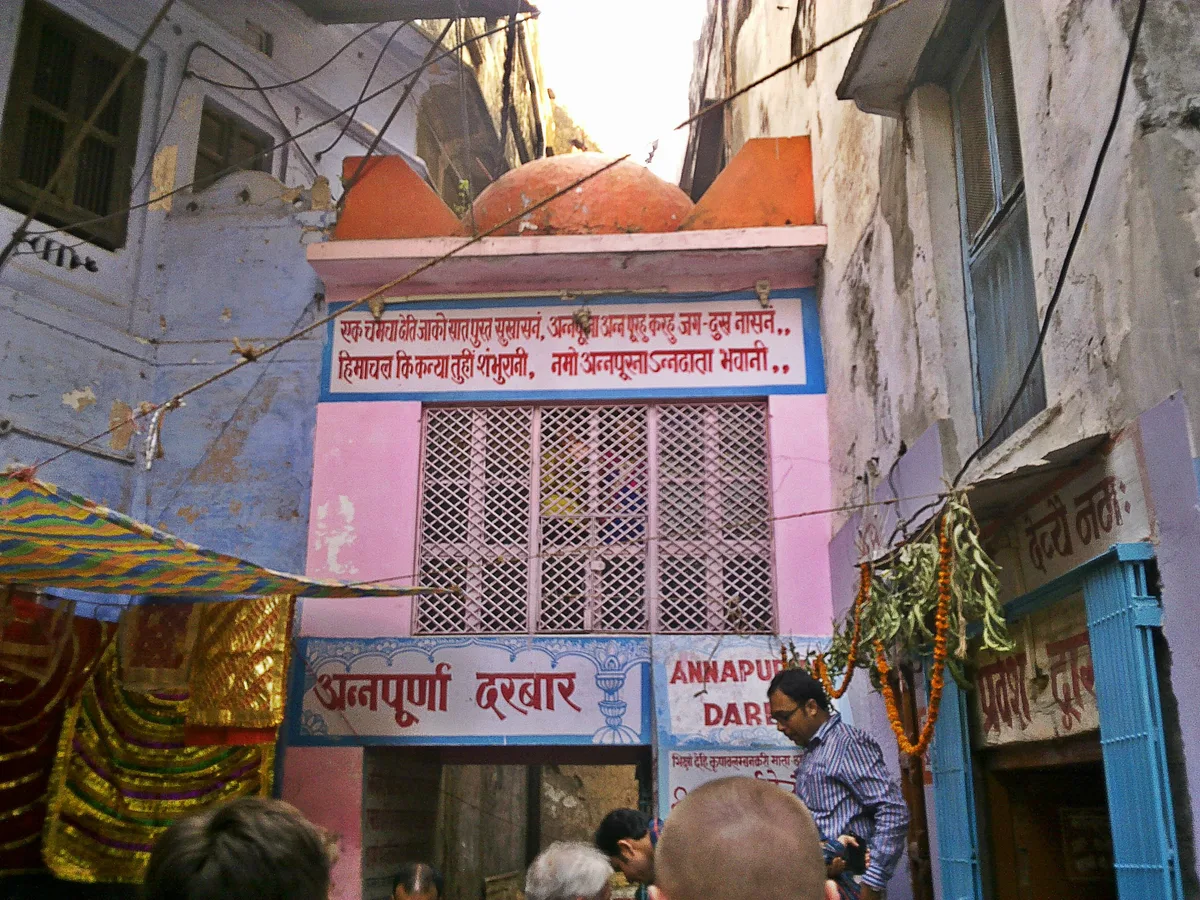
Annapurna Devi Temple is dedicated to Maa Annapurna — the goddess of food and nourishment, and a significant manifestation of the divine feminine in the Shaiva tradition. Located in the lanes near Kashi Vishwanath Temple, this temple is an integral part of the Varanasi temple pilgrimage circuit and holds a specific theological significance: in the most famous story of Annapurna and Kashi, Shiva himself was compelled to beg the goddess for food here — acknowledging that even the destroyer of worlds is dependent on nourishment.
The Legend: When Shiva Begged for Food
The central legend of Annapurna in Kashi is found in several Puranic texts. Lord Shiva, in his role as the ascetic and renunciant, is said to have dismissed the material world as maya (illusion) — including food and nourishment. Maa Parvati, his consort, decided to demonstrate the reality and importance of the material world by withdrawing herself from it — and with her the principle of food and nourishment.
All creation immediately experienced famine. Shiva, realising that even he could not exist without the sustaining power of the goddess, came to Kashi — where Annapurna had established herself — and stood with a begging bowl, asking for food. The goddess served him with her own hands. This act of divine begging is understood as Shiva's acknowledgement that liberation and the material world are inseparable, and that the goddess's power of nourishment is as fundamental as Shiva's power of dissolution.
This story makes Annapurna Devi Temple theologically essential in Kashi — pilgrims visit to receive her blessing for sustained wellbeing and abundance.
The Temple and Prasad
The Annapurna Devi Temple is located in the dense lanes near Kashi Vishwanath Temple, a short distance from the main temple entrance. The temple is always busy with devotees making offerings and receiving prasad — particularly anna (cooked rice or food items), reflecting the goddess's direct association with nourishment.
The image of Annapurna Devi inside the sanctum is typically depicted with a ladle and pot, ready to serve. The temple is decorated lavishly during Diwali and Annakut — when a mountain of food is offered to the deity.
Many pilgrims visiting Kashi Vishwanath also visit Annapurna Devi to complete the paired worship of Shiva and his goddess consort in the same sacred precinct.
Frequently Asked Questions
Is Annapurna Devi Temple open to non-Hindus?▼
The outer areas and courtyard are generally accessible. Entry to the inner sanctum follows Hindu temple norms. Check at the temple entrance regarding specific access on the day of your visit. Non-Hindus can respectfully view the outer temple and receive the atmosphere of the lane.