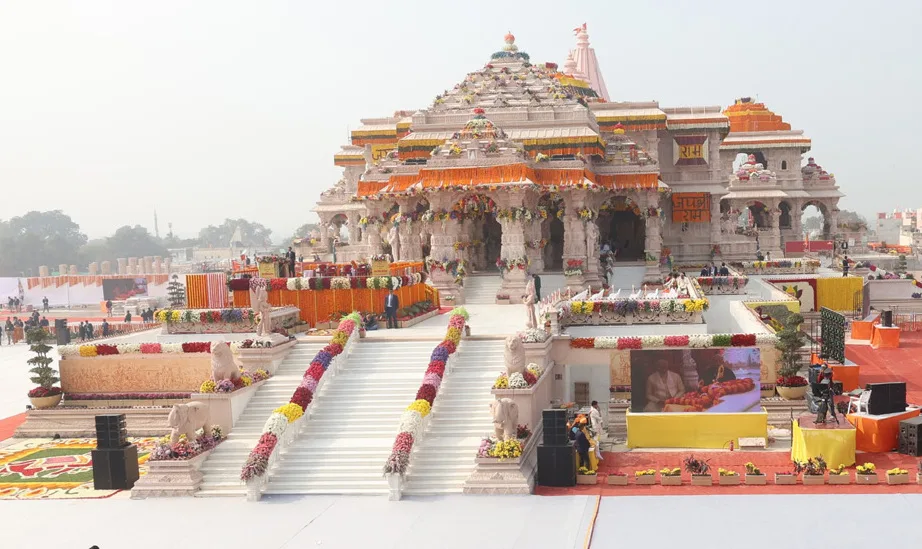
Ayodhya and Kashi: The Complete Pilgrimage Planning Guide
Lord Rama's birthplace to Lord Shiva's city — the most powerful pilgrimage circuit in North India
The pilgrimage from Ayodhya to Varanasi (Kashi) is one of the oldest and most spiritually charged journeys in Hinduism. Ayodhya — the birthplace of Lord Rama, home to the newly consecrated Ram Mandir — and Varanasi (Kashi) — the ancient city of Lord Shiva, home to the Kashi Vishwanath Jyotirlinga — sit at the centre of two of Hinduism's most sacred narratives. Since the Ram Mandir consecration in January 2024, the Ayodhya + Kashi circuit has become one of the most sought-after pilgrimage combinations in India. This guide covers what to see in each city, how many days to allocate, the recommended order of visit, and the logistics of moving between them.
Why This Pilgrimage Circuit Matters
Ayodhya and Kashi represent the two great divine figures at the heart of North Indian Hinduism — Rama and Shiva. The Ramayana itself connects the two cities: after completing his rule of Ayodhya, Lord Rama is described as having visited Kashi to seek Lord Shiva's blessing. For Hindu pilgrims, combining both shrines in a single journey is not merely convenient — it is spiritually complete in a way that visiting either city alone is not.
Ayodhya's significance deepened dramatically since the consecration of the Ram Mandir in January 2024 — one of the most significant events in modern Indian religious history. The temple, built at the site of the Ram Janmabhoomi (the birthplace of Lord Rama), draws pilgrims from across India and the global Hindu diaspora. The scale of the main shrine, the quality of its carved Rajasthani sandstone construction, and the sanctity of the location together make it one of the most powerful places of darshan in the subcontinent.
Kashi — Varanasi — is older, denser, and different in character. While Ayodhya's transformed cityscape feels new, Kashi's medieval lanes and ancient ghats carry the accumulated weight of millennia. The Kashi Vishwanath Jyotirlinga — one of the twelve Jyotirlingas — draws Shaivite pilgrims from across the world. Bathing in the Ganga, witnessing the Ganga Aarti at Dashashwamedh Ghat, and receiving darshan at Kashi Vishwanath are acts of profound spiritual merit in Hindu tradition.
Order of Visit: Which City First?
The traditional pilgrimage order is Ayodhya first, then Kashi — following the direction Lord Rama himself travelled. From a practical standpoint, this order also suits the geography: Ayodhya is approximately 200 km west of Varanasi, and most travellers arrive from Delhi or Lucknow before continuing east to Kashi.
For travellers arriving from Delhi or Lucknow: reach Ayodhya first (by train to Faizabad Junction or Ayodhya Dham station), complete the Ayodhya darshan over 1–2 days, then travel to Varanasi (4–5 hours by train or 3.5–5 hours by road).
For travellers arriving from South India or East India: visiting Kashi first and Ayodhya second is equally valid if your arrival point is Varanasi. The spiritual merit is not diminished by the reversed order.
For visitors from Mumbai, Gujarat, or Rajasthan: flying to Lucknow first (for Ayodhya) and returning from Varanasi, or vice versa, are both practical structures.
How Many Days for the Circuit?
Minimum meaningful visit: 4 days.
4-day structure: Day 1 — arrive Ayodhya, Hanuman Garhi, Saryu Ghat Aarti. Day 2 — Ram Mandir darshan (early morning), Kanak Bhawan, depart for Varanasi. Day 3 — Varanasi: Ganga Aarti, sunrise boat ride, Kashi Vishwanath darshan. Day 4 — old city walk, departure.
Recommended: 5–6 days.
5-day structure: Days 1–2 in Ayodhya; Day 3 travel to Varanasi + evening Ganga Aarti; Day 4 sunrise boat + Kashi Vishwanath + Sarnath; Day 5 old city heritage walk. This pace allows a genuine experience of both cities without rushing.
6-day structure (for a once-in-a-lifetime pilgrimage): 2 nights Ayodhya + 3 nights Varanasi. The extra Varanasi night adds the southern temple circuit — Kal Bhairav, Sankat Mochan, Durga Temple, Annapurna Temple — completing the full Kashi darshan.
What to See in Ayodhya
Ram Janmabhoomi Temple (Ram Mandir): The principal destination of any Ayodhya pilgrimage. The main shrine is built in the Nagara architectural style in pink Rajasthani sandstone and contains the Ram Lalla idol — the deity of infant Rama. The darshan involves a security check, queue management, and passage through the pillared mandapam before the main sanctum. Allow 1–2 hours including queue time on weekdays; significantly more on weekends and peak festival dates.
Hanuman Garhi: A fortress-temple dedicated to Lord Hanuman, overlooking Ayodhya from an elevated position. 76 steps lead to the main shrine. Many pilgrims visit here before the Ram Mandir, seeking Hanuman's blessing before approaching the principal darshan. The views over Ayodhya from the upper terrace are excellent.
Kanak Bhawan: A palace-temple enshrining golden-crowned idols of Sita and Rama, traditionally said to have been gifted to Sita by Queen Kaikeyi. The interior decoration — ornate ceilings and walls — makes this one of Ayodhya's most visually striking temples.
Saryu Ghat and Ram Ki Paidi: The Saryu River's main ghat complex, with steps leading to the river and several shrines along the bank. An evening Aarti is performed here daily. Bathing in the Saryu is an act of pilgrimage merit.
Getting Between Ayodhya and Varanasi
By train: From Faizabad Junction (FD) or Ayodhya Dham station (AY) to Varanasi Junction (BSB), the journey takes approximately 4–5 hours. Check IRCTC for current train schedules.
By road: The road distance from Ayodhya to Varanasi is approximately 200 km via the Sultanpur–NH27 route. A private car covers this in 3.5–5 hours depending on traffic. Bus services also connect the two cities.
Book Varanasi accommodation before departing Ayodhya — particularly for October–March peak season, when ghat-area guesthouses book out quickly.
Practical Planning Notes
Ram Mandir queue management: The queue can be several hours long on peak days — Ram Navami, Diwali, Kartik month weekends. A weekday morning or the night darshan (queues shorter after 8–9 PM) significantly reduces wait time. No private operator can jump the general darshan queue.
Season: October–March is the most comfortable for both cities. Kartik month (October–November) brings large crowds — Varanasi's Dev Deepawali on Kartik Purnima is spectacular but intensely crowded.
Accommodation: In Ayodhya, a rapidly expanding hotel supply has emerged since 2024. For Varanasi, the Assi Ghat area is a good base for 3+ night stays — quieter than the central ghats area, with good transport access. Pre-book both cities.
Frequently Asked Questions
How many days should I plan for the Ayodhya + Kashi circuit?▼
The minimum is 4 days — 1 night Ayodhya and 2–3 nights Varanasi. The recommended allocation is 5–6 days: 2 nights in Ayodhya for the Ram Mandir darshan, Hanuman Garhi, and the Saryu Ghat Aarti at a relaxed pace, followed by 3 nights in Varanasi for the sunrise boat ride, Kashi Vishwanath darshan, Sarnath, and the Ganga Aarti.
Is there a Spirit of Kashi tour that covers both Ayodhya and Kashi?▼
Yes — Spirit of Kashi offers the Ayodhya + Kashi Tour, covering both sacred cities with expert local guides and transport between cities, structured around pilgrimage priorities. Enquire via WhatsApp to discuss dates and group size.
Can I combine Prayagraj with this circuit?▼
Yes — the classic extension is Prayagraj + Ayodhya + Kashi. Prayagraj (the Triveni Sangam) is 120 km from Varanasi, 2 hours by train. A practical structure: Ayodhya first, then Varanasi, then Prayagraj as the final leg before returning to Delhi or flying home. This full circuit takes 7–9 days for a comfortable experience.