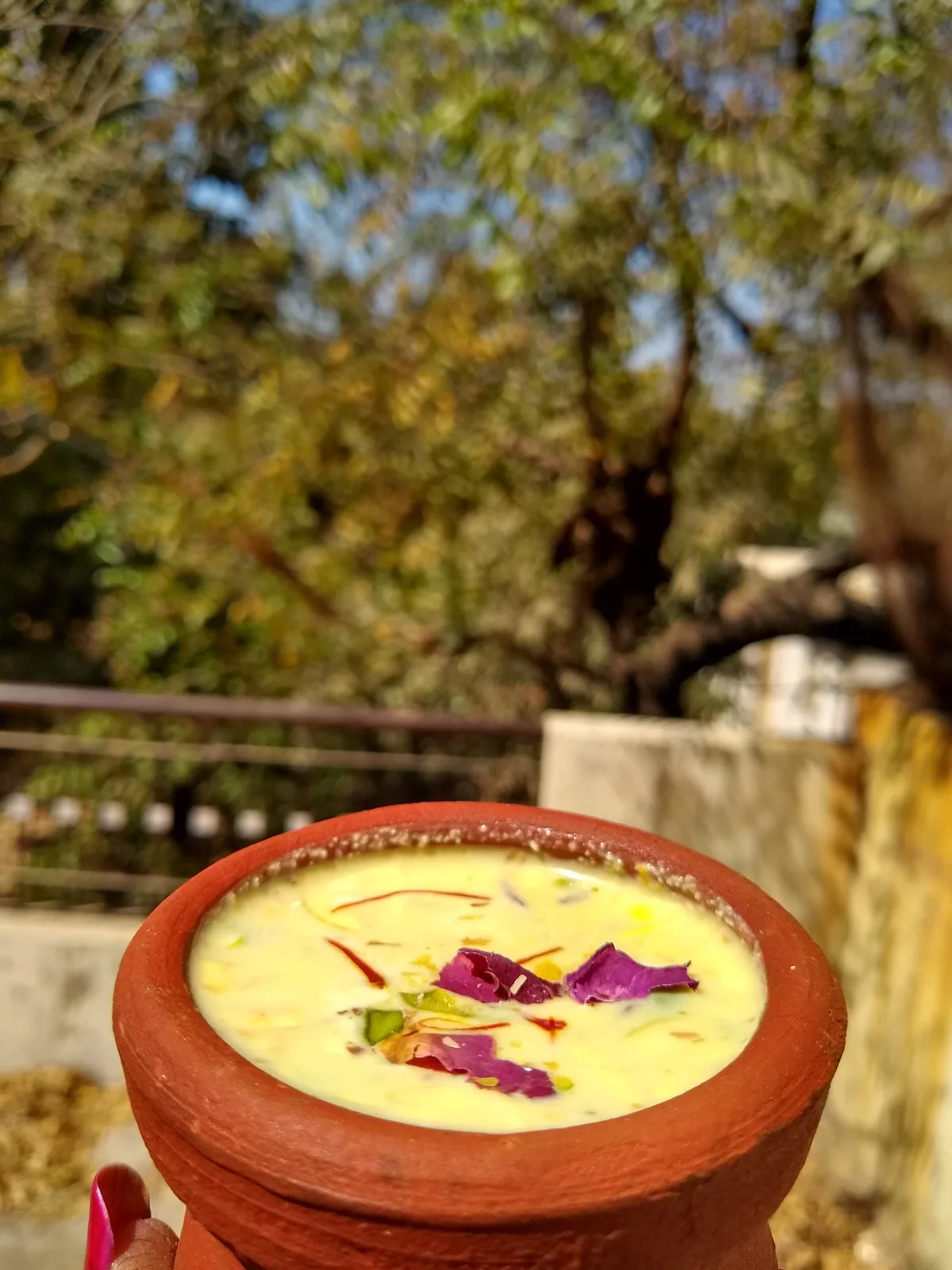
Banarasi Thandai: The Spiced Milk Drink of Kashi
A cold milk drink made with roses, almonds, and spices — the flavour of Varanasi festivals
Banarasi Thandai is a cold, spiced milk drink that has been associated with Varanasi's festivals — particularly Holi and Mahashivratri — for centuries. Made by grinding a blend of fennel seeds, poppy seeds, rose petals, black peppercorns, cardamom, almonds, pistachios, and melon seeds, then mixing with chilled whole milk and sugar, it is a drink of considerable complexity and a defining flavour of the spring festival season in Varanasi.
The Thandai Recipe and Its Significance
The word 'thandai' means 'that which cools' — and the drink is designed to cool both body and mind. The spice combination is based on Ayurvedic principles: some ingredients (fennel, poppy seeds, melon seeds) are cooling in nature; others (pepper, ginger if used) are warming. Together they balance the system, reduce heat, and provide sustained energy — ideal for the spring festivals when days are hot and celebrations run through the night.
The preparation of authentic thandai requires a minimum of one hour: each ingredient is soaked separately (almonds are peeled, rose petals softened), then ground together on a stone grinder (sil batta) with water until a smooth paste forms. This paste is the thandai concentrate, which can be stored for several days. To serve, it is mixed with cold whole milk and sweetened with sugar or rose syrup.
The flavour of properly made Banarasi thandai is multi-layered: cool and aromatic from the fennel and rose, slightly peppery, with the rich base of milk and the almond paste giving it body. The commercial packaged thandai mixes do not capture this.
Thandai During Holi and Mahashivratri
Thandai is consumed throughout the year at established shops, but its cultural moment is during Holi and Mahashivratri. During these festivals, the drink appears at virtually every home, stall, and temple serving station in Varanasi.
The Holi connection is ancient: thandai is offered to Lord Shiva during Mahashivratri worship, and distributed to devotees. During Holi itself (specifically in Varanasi and Mathura), bhang-laced thandai (bhang ki thandai) is traditionally consumed. Bhang is the dried leaves and flowers of the cannabis plant, legal in Uttar Pradesh for traditional use, and has been used in religious festivals in this region for millennia. Bhang thandai has a significantly different effect than the regular version and should be approached with awareness by those who are not familiar with it.
The regular version (without bhang) is available year-round and is completely safe for all visitors.
Frequently Asked Questions
How do I distinguish between regular thandai and bhang thandai?▼
In Varanasi, shops offering bhang thandai typically display this openly (in Hindi: 'bhaang ki thandai'). The price is usually higher for the bhang version. If you are not sure, ask explicitly — 'isme bhaang hai?' (is there bhang in this?). Legitimate vendors will answer honestly. Do not consume bhang thandai if you are unfamiliar with its effects, have plans that require clear thinking, or are in any state of uncertainty about what you are drinking.
Can children drink thandai?▼
Regular thandai (without bhang) is safe and enjoyable for children — it is essentially spiced almond milk. Ensure the shop confirms no bhang has been added when ordering for children. During festival season in Varanasi, always confirm explicitly what you are ordering.