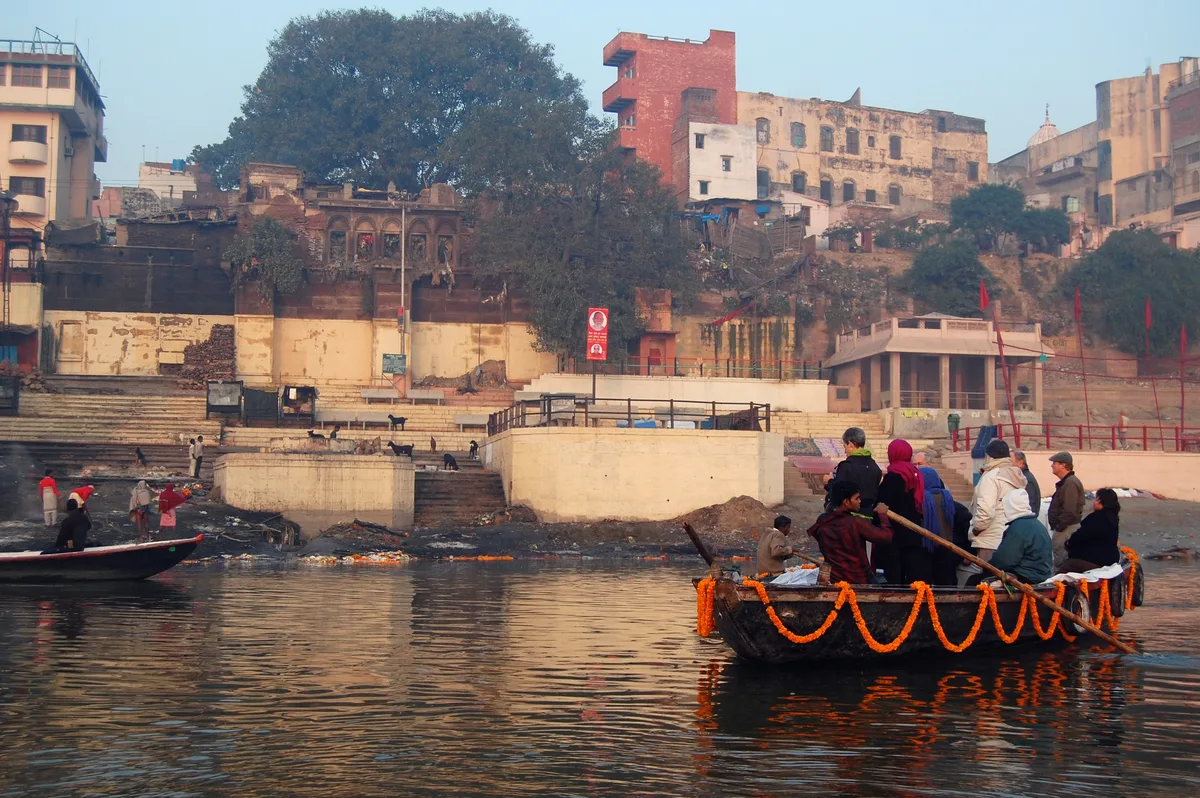
Harishchandra Ghat Varanasi: The Ancient Cremation Ghat
Named for the legendary king who sacrificed everything for truth
Harishchandra Ghat is the older of Varanasi's two main cremation ghats — smaller and quieter than the better-known Manikarnika, but considered equally sacred by many Hindu traditions. It is named after King Harishchandra, one of Hinduism's most revered moral legends: a king who voluntarily gave away his entire kingdom, then was forced to work at this very cremation ground as a servant, to prove the absolute inviolability of his commitment to truth.
The Legend of King Harishchandra
The story of Harishchandra is one of Hinduism's great moral parables, recounted in the Markandeya Purana and referenced throughout Vedic literature. Harishchandra was a righteous king of the solar dynasty, so renowned for his truthfulness that the sage Vishwamitra decided to test him.
Harishchandra was made to surrender his entire kingdom, then his wife Shaivya, then his son Rohitashva, in payment of a debt. Finally, separated from his family and stripped of everything, he was sold as a servant and forced to work at a cremation ground — this ghat in Kashi. Even in these circumstances, he refused to break his word or compromise his principles. Eventually the gods themselves interceded, declaring that his virtue had surpassed even theirs. His kingdom, family, and honour were restored, and he and his family were taken bodily to heaven.
The legend teaches that truthfulness and dharma will ultimately triumph regardless of worldly loss. Harishchandra remains one of Hinduism's most celebrated icons of moral integrity.
The Ghat Today: Tradition and the Electric Crematorium
Harishchandra Ghat operates as a cremation site around the clock, like Manikarnika, but is used by fewer families and has a quieter, more solemn atmosphere. The ghat is traditionally associated with certain regional and caste communities, though this is not a strict boundary.
The ghat also contains one of India's earlier electric crematoriums — built as a modern alternative to wood pyres, though many families still prefer the traditional method for religious reasons. The coexistence of the ancient pyre and the modern crematorium on the same ghat reflects Varanasi's characteristic layering of the ancient and contemporary.
A Harishchandra temple at the ghat honours the legendary king. The ghat steps and adjacent buildings are older in character than the more photographed Manikarnika, giving it a rawer, more austere feel.
Visiting Respectfully
The same etiquette applies here as at Manikarnika: absolutely no photography, modest dress, quiet observation from a distance, and firm refusal of any unsolicited approaches offering 'help.' Unlike Manikarnika, Harishchandra Ghat receives significantly fewer visitors, which can make the experience more reflective and less managed.
Harishchandra Ghat is located south of Manikarnika, between Kedar Ghat and Scindia Ghat. It can be reached on foot by walking along the riverfront from Dashashwamedh, or by boat. A Spirit of Kashi guide can place the legend and the rituals in their full context.
Frequently Asked Questions
What is the difference between Harishchandra Ghat and Manikarnika Ghat?▼
Both are sacred cremation ghats in Varanasi. Manikarnika is larger, busier, and more well-known. Harishchandra Ghat is older, smaller, and quieter — used by fewer families and receiving fewer visitors. Manikarnika is considered slightly more sacred in popular tradition (associated with Shiva's trishul), while Harishchandra carries the specific significance of the King Harishchandra legend. Both deserve the same respectful approach.
Is the electric crematorium at Harishchandra Ghat still in use?▼
Yes, the electric crematorium operates alongside the traditional wood pyres. Many families choose the traditional pyre for religious reasons, as the specific rites of the cremation (lighting the pyre, circumambulating, placing the fire) are integral to Hindu funeral practice. The electric option is used by some families, particularly when wood cost is a concern or for other practical reasons.