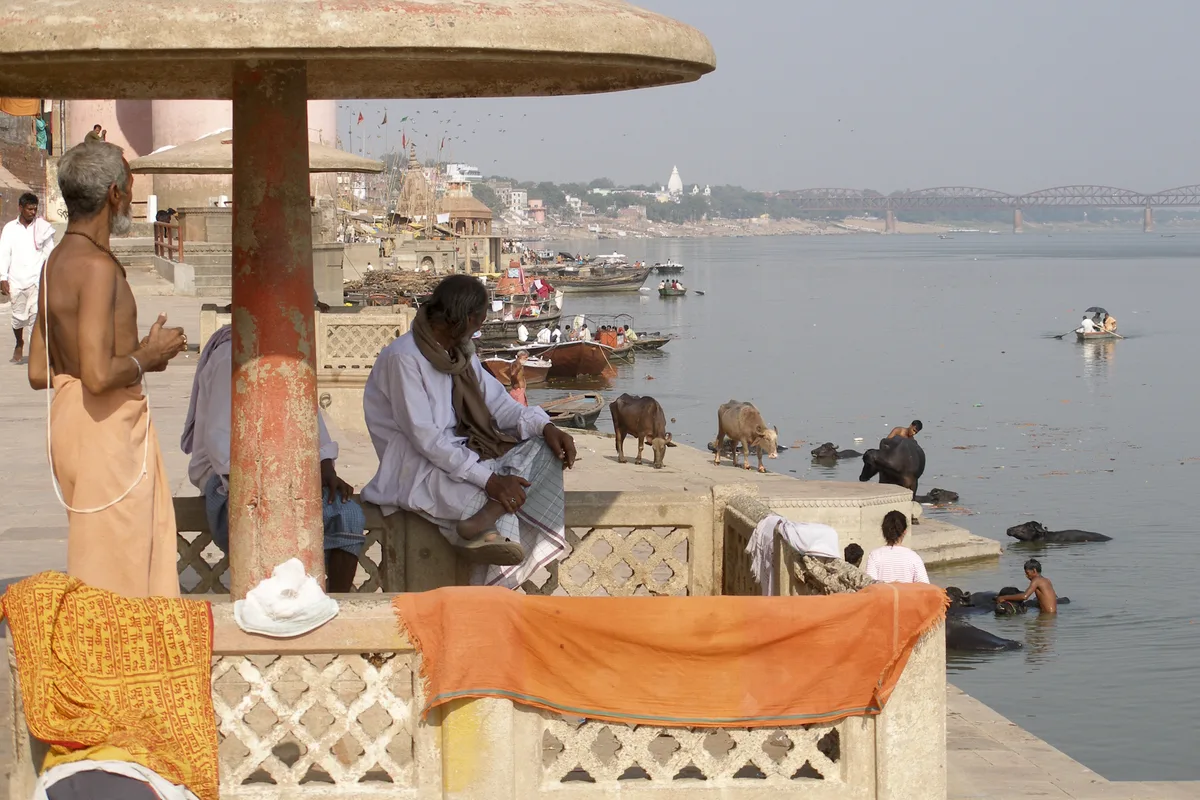
Panchkroshi Yatra Varanasi: The Sacred 88-km Pilgrimage Around Kashi
88 km on foot — 108 shrines — the ancient circumambulation that maps the boundary of Kashi
The Panchkroshi Yatra is one of the most demanding and theologically significant pilgrimages in the Hindu tradition — a circumambulatory walk of approximately 88 kilometres around the outer boundary of ancient Kashi, completed over five days on foot, visiting 108 sacred shrines along the route. The yatra defines and sanctifies the outer limits of the sacred city: to walk the Panchkroshi is to trace the boundary of Lord Shiva's own domain on earth. Pilgrims who complete the yatra are said to receive the spiritual merit of visiting every sacred site within Kashi.
The Theology of the Yatra
In Hindu cosmology, Kashi (Varanasi) is not merely a city — it is Shiva's own realm, the Anandavana (forest of bliss), the one place on earth where liberation (moksha) is available to all who die within its boundaries. The Panchkroshi Yatra traces the outer circumference of this sacred zone — a concept known in Sanskrit as the Panchakroshi ('five kroshi', a kroshi being a traditional measure of distance).
By circumambulating the sacred boundary on foot, pilgrims symbolically encompass all of Kashi within their act of worship. The 108 shrines visited along the route collectively represent the complete sacred geography of Kashi — so that a pilgrim who cannot visit every temple within the city can, through the Panchkroshi walk, receive the equivalent merit.
The route is described in ancient texts including the Kashi Khanda of the Skanda Purana — making the Panchkroshi one of the oldest-documented pilgrimage circuits in the world. The five days of walking correspond to five stages of the route, with overnight halts at specific villages or dharamshalas along the way.
The Route and What to Expect
The Panchkroshi Yatra traditionally begins and ends at Manikarnika Ghat — the most sacred cremation ground in Varanasi and one of the most important tirthas in Kashi. From Manikarnika, pilgrims proceed in a clockwise direction around the outer boundary of the city, following a route that passes through villages, fields, and sacred sites on the outskirts of Varanasi.
The five stages of the route: - Day 1: Manikarnika Ghat to Kardamesvara (approximately 16 km) - Day 2: Kardamesvara to Bhimchandi (approximately 22 km) - Day 3: Bhimchandi to Rameshvara (approximately 20 km) - Day 4: Rameshvara to Shivpur (approximately 20 km) - Day 5: Shivpur back to Manikarnika Ghat (approximately 10 km)
The distances are approximate and the route passes through semi-rural terrain — some sections are on proper roads, others are village paths. The yatra requires reasonable physical fitness; many elderly pilgrims complete it over more than five days with rest stops.
At each of the 108 shrines along the route, pilgrims offer puja and receive darshan. The shrines range from small roadside lingas to larger temples; a guide or pujari (priest) accompanying the yatra explains the significance of each.
Auspicious Times for the Yatra
While the Panchkroshi Yatra can be undertaken at any time of year, certain periods are considered especially auspicious:
Panchkroshi Mela — A major collective yatra is organised on the occasion of certain festivals, particularly in the month of Jyeshtha (May–June). During the Panchkroshi Mela, thousands of pilgrims undertake the circuit simultaneously — creating a moving river of devotees around the sacred boundary.
Kartik month (October–November) is considered especially auspicious for all Kashi pilgrimages, including the Panchkroshi.
Avoiding summer: The months of May and June can be extremely hot (40–45°C), making the 88-km walk arduous. October–November and February–March (cooler months) are the most comfortable seasons for the walk.
Frequently Asked Questions
Can non-Hindu visitors do the Panchkroshi Yatra?▼
The route itself passes through public roads and villages and is accessible to all. The specific temple entry and puja at each shrine follows Hindu temple norms — some inner sanctums restrict access. A respectful cultural observer interested in the pilgrimage route can accompany a guide, with the understanding that certain ritual spaces may be inaccessible.
Is the Panchkroshi Yatra completed in one continuous 88-km walk?▼
It is traditionally completed over 5 days with overnight halts at specific points on the route. Some very devoted pilgrims complete it without rest (an extended feat), but the standard form is the 5-day circuit. The walk covers approximately 15–22 km per day — achievable for a moderately fit pilgrim.