Kashi Vishwanath Corridor Varanasi: The 2021 Redevelopment Guide
The Jyotirlinga now faces the Ganga — a 400-year dream realised in December 2021
The Kashi Vishwanath Corridor is one of the most significant religious infrastructure projects completed in India in recent decades. Inaugurated on 13 December 2021 by Prime Minister Narendra Modi, the Corridor transformed the approach to the Kashi Vishwanath Temple — India's most sacred Shiva shrine and one of the twelve Jyotirlingas. For the first time in centuries, pilgrims can walk from the Ganga ghats directly to the temple entrance through a broad, open ceremonial corridor, with a clear line of sight between the temple and the sacred river.
What the Corridor Changed
Before the Corridor project, the Kashi Vishwanath Temple was embedded deep within the dense lanes of the old city — accessible only through narrow galis barely wide enough for two people to pass. There was no direct connection between the temple and the Ganga; pilgrims seeking to bathe in the river and then proceed to the temple had to navigate a complex route through the lanes.
The Corridor project involved clearing structures within a delineated area between the temple and Lalita and Manikarnika Ghats, relocating residents and businesses, and constructing a grand ceremonial precinct. The project covered approximately 5 lakh square feet (50,000 square metres) of redeveloped area.
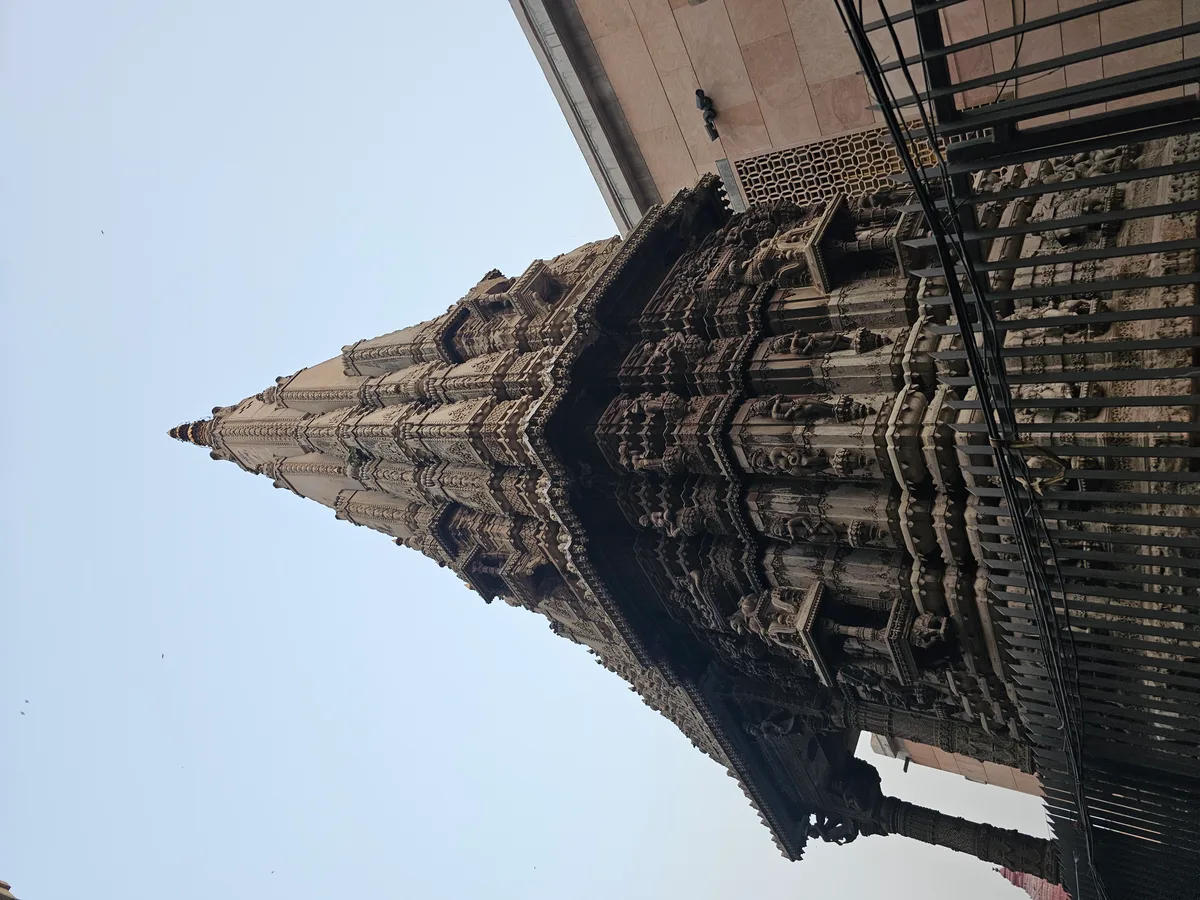
The result is a broad, marble-paved corridor running from the ghats directly to the temple entrance — allowing pilgrims to approach from the river, bathe, and proceed to darshan in a single, unobstructed movement. The temple shikhara (tower) is now visible from the ghats for the first time in perhaps four centuries.
What to See in the Corridor
The Corridor complex includes several elements beyond the approach pathway:
Mandapams (ceremonial halls): Multiple open and covered mandaps were constructed for gatherings, rituals, and waiting areas — providing shade and seating for pilgrims.
Museum: A Kashi Vishwanath museum within the complex presents the history of the temple — including its multiple demolitions and reconstructions, the original temple complex, and the construction of the current temple by Ahilya Bai Holkar of Indore in 1780.
Views of the Gyanvapi Mosque: The Corridor's opening exposed views of the Gyanvapi Mosque, which is built on the site of the original Kashi Vishwanath Temple demolished in 1669. This adjacency — the old mosque and the corridor temple side by side — is historically complex and significant.
Ghats access: The Corridor's eastern end connects to Lalita Ghat and the area near Manikarnika Ghat — the sacred cremation ground. Pilgrims can thus complete the bathing-and-darshan sequence in one continuous movement.
Visiting the Corridor and Temple
Access to the Kashi Vishwanath Temple through the Corridor follows the same rules as the main temple: non-Hindus are not permitted inside the main Kashi Vishwanath Temple sanctum. However, the Corridor itself — the open marble precinct — is accessible to all visitors as a public space.
Security measures are extensive: all bags and electronics must be deposited at locker facilities before entering the temple complex. Photography is restricted within the inner temple precincts. The locker facilities are managed by the Kashi Vishwanath Temple Trust and are free to use.
The Corridor is most atmospherically experienced in the early morning — at sunrise, when the light falls on the marble precinct and the ghats below. Evening is the next best time — the Sandhya Aarti inside the temple and the evening ghat atmosphere coincide.
Allow 1.5–3 hours for a full visit including bag deposit, queue management, darshan, and return.
Frequently Asked Questions
Can non-Hindu visitors see the Kashi Vishwanath Corridor?▼
The Corridor — the open precinct connecting the ghats to the temple entrance — is accessible to all visitors regardless of faith. The inner Kashi Vishwanath Temple sanctum requires visitors to be Hindu. Non-Hindu visitors can walk the Corridor, experience the atmosphere, visit the museum, and see the temple exterior and the views to the Ganga.
How long should I allow for the Corridor and temple visit?▼
Allow a minimum of 1.5 hours and up to 3 hours on busy days. Time includes bag deposit (15 minutes), queue for darshan (30 minutes to 2 hours depending on date and time), darshan itself (a few minutes), and return. Early morning weekday visits have the shortest queues.
What happened to the structures that were demolished for the Corridor?▼
The Kashi Vishwanath Corridor project involved the acquisition and demolition of approximately 300 structures — shops, residences, and other buildings — in the area between the temple and the ghats. Residents and businesses were relocated and compensated as part of the government-managed project. The project was managed by the Uttar Pradesh government and the Kashi Vishwanath Temple Trust.