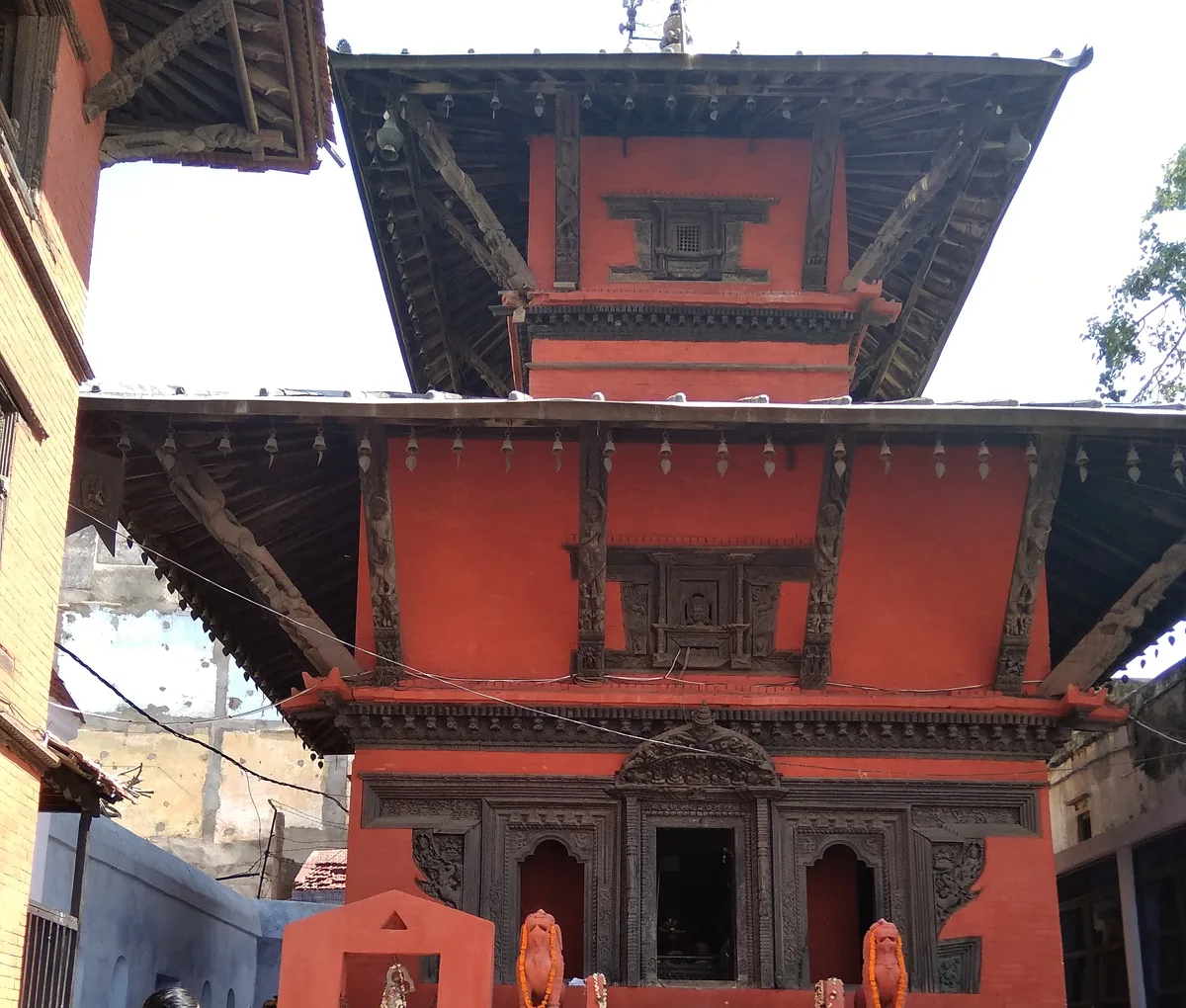
Lalita Ghat Varanasi: The Nepali Pashupatinath Temple
A Kathmandu pagoda on the Ganga — Nepal's king built a Pashupatinath replica in Kashi during his exile
Lalita Ghat is a relatively quiet ghat in the northern part of Varanasi's sacred waterfront — but it contains one of the most architecturally distinctive structures on the entire 6.5-kilometre ghat stretch: a Nepali pagoda temple built in the Newar (Kathmandu Valley) tradition, housing a Samrajyeshwar Pashupatinath Mahadev lingam. The temple was commissioned by King Rana Bahadur Shah of Nepal during his exile in Varanasi in the early 19th century, making it a living symbol of the deep historical ties between Nepal and Kashi. It stands in vivid contrast to the predominantly north Indian Nagara-style temples around it. Lalita Ghat sits adjacent to Manikarnika Ghat and near the river-side entrance to the Kashi Vishwanath Corridor.
The Nepali Pashupatinath Temple
The Kathmandu-style pagoda at Lalita Ghat is one of Varanasi's most photographically distinctive structures. Built using traditional Newar craftsmanship in terracotta, stone and wood — with tiered roofs, intricate carved wooden panels (drawing comparisons to Khajuraho, earning it the nickname 'Mini Khajuraho') and a proportional system entirely different from the Nagara temples around it — the temple immediately arrests the eye.
The temple's construction began when King Rana Bahadur Shah of Nepal took exile in Varanasi from 1800 to 1804, adopting the title 'Swami Nirgunanda.' He initiated the project as a replica of the Pashupatinath Temple in Kathmandu — one of the holiest Shiva shrines in the world and a UNESCO World Heritage Site. The king returned to Nepal in 1804 and was assassinated in 1806. His son, Girvan Yuddha Bikram Shah, completed the construction project around 1843. The land was formally transferred by the Kashi Naresh in 1842–43. The entire complex — the temple, ghat, and a dharamshala — remains under Government of Nepal ownership to this day.
The temple is also known as the Kathwala Temple. The deity is Samrajyeshwar Pashupatinath Mahadev — a name specific to this shrine. The theological logic is direct: Kashi is the supreme city of Shiva, and Pashupatinath is Shiva in his aspect as Lord of Animals — so a Nepal king in exile in Kashi would naturally establish a Pashupatinath shrine here.
Note: Some original wooden carvings have been replaced with brick over the decades due to maintenance challenges. The carved elements that remain are housed in the courtyard. Access to the inner sanctum is traditionally restricted to Hindu pilgrims. The exterior and ghat are freely accessible to all visitors.
Lalita Ghat and the Kashi Vishwanath Corridor
Lalita Ghat is situated in the northern section of the main ghat stretch, adjacent to Manikarnika Ghat — Varanasi's principal cremation ghat — which lies immediately to its north. Scindia Ghat lies to the south. The Kashi Vishwanath Corridor, inaugurated in December 2021, redeveloped the approach from the ghats to the Kashi Vishwanath Temple; the corridor's river-side entrance is near the Lalita–Manikarnika area, making this section of the waterfront a major pilgrimage approach route.
The corridor has significantly opened up the immediate neighbourhood: narrow galis between the ghat area and the temple precinct were cleared, replaced with a broad paved pilgrimage walkway. The Kashi Vishwanath temple spire is now visible from the ghat for the first time in centuries. For pilgrims doing the Kashi Vishwanath circuit from the river side, Lalita Ghat area is one of the primary ghat entrances.
Visiting Lalita Ghat
Lalita Ghat is best visited as part of a northern ghat walk. Manikarnika Ghat — the main cremation ghat where fires burn continuously — is immediately to the north. Scindia Ghat, with its famous partially-submerged Shiva temple, is immediately to the south. The combination of the Nepali pagoda (at Lalita), the leaning temple (at Scindia), and the burning ghats (at Manikarnika) makes this northern cluster one of the most concentrated collections of ghat character on the entire stretch.
Sunrise is the best time to visit: the early light catches the tiered wooden eaves of the pagoda from the east, and the ghat is quiet. A sunrise boat ride passes Lalita Ghat and gives a clear view of the pagoda rising above the ghat steps from the river.
Ganga Aarti at Lalita Ghat
CURRENT INFORMATION: The Kashi Vishwanath Temple Trust began conducting a daily Ganga Aarti ceremony at Lalita Ghat on 19 March 2026 — a relatively new addition to Varanasi's ritual calendar, complementing the long-established evening Aarti at Dashashwamedh Ghat (a short walk to the south). The ceremony takes place every evening.
This second Aarti ceremony at Lalita Ghat reflects the growing significance of this section of the waterfront following the Kashi Vishwanath Corridor redevelopment.
Schedules can change; confirm locally before visiting.
Frequently Asked Questions
What is special about Lalita Ghat in Varanasi?▼
Lalita Ghat is home to the Nepali Pashupatinath Temple — a pagoda-style structure built in traditional Newar (Kathmandu Valley) architecture, using terracotta, stone and carved wood. The temple is a replica of Kathmandu's Pashupatinath Temple, commissioned by King Rana Bahadur Shah of Nepal during his exile in Varanasi (1800–1804) and completed by his son around 1843. Its carved wooden panels are so intricate that it is sometimes called 'Mini Khajuraho'. The complex remains under Government of Nepal ownership.
Can non-Hindus visit the Nepali temple at Lalita Ghat?▼
Non-Hindus can visit the ghat and photograph the exterior and courtyard of the Nepali pagoda temple freely. Access to the inner sanctum is traditionally restricted to Hindu pilgrims — mirroring the practice at the Kathmandu Pashupatinath Temple. The ghat steps and exterior temple views are open to all.
Where is Lalita Ghat in relation to the other major ghats?▼
Lalita Ghat is in the northern part of the main ghat stretch, adjacent to Manikarnika Ghat (the principal cremation ghat) just to its north, and Scindia Ghat just to its south. The Kashi Vishwanath Corridor river entrance is nearby. Dashashwamedh Ghat (the Ganga Aarti site) is further south, a 15–20 minute walk.
Is there a Ganga Aarti at Lalita Ghat?▼
Yes — since March 2026, the Kashi Vishwanath Temple Trust conducts a daily evening Ganga Aarti ceremony at Lalita Ghat. This is a newer ceremony, complementing the long-established Aarti at Dashashwamedh Ghat. Schedules can change; confirm locally before visiting.