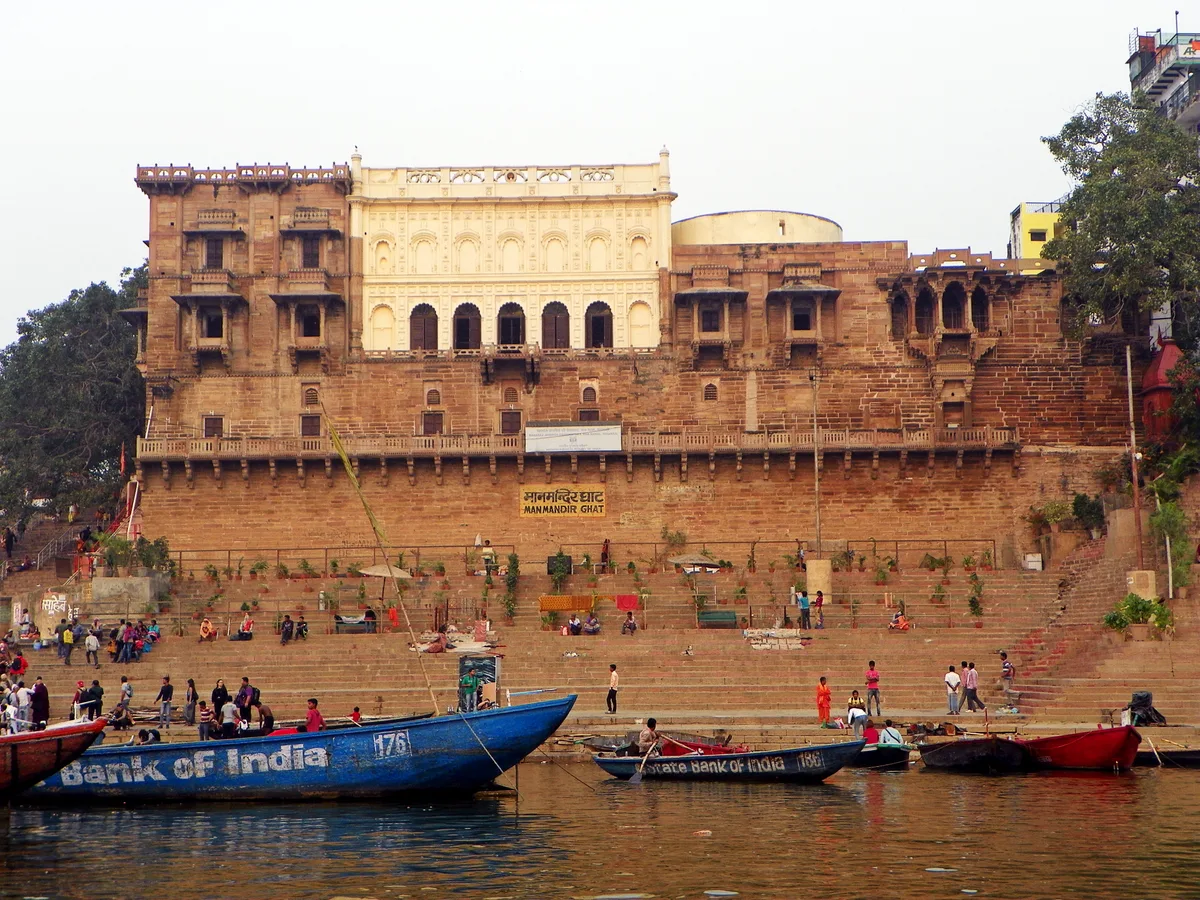
Man Mandir Ghat Varanasi: The Ghat with an Ancient Observatory
A Jaipur Maharaja's palace ghat — home to one of India's five Jantar Mantar observatories
Man Mandir Ghat stands out along Varanasi's riverfront for its elaborately carved facade, the upper storeys of which contain one of India's five famous Jantar Mantar astronomical observatories. Built in the early 18th century by Maharaja Jai Singh II of Jaipur — the same ruler who built the Jantar Mantar in Delhi, Jaipur, Ujjain, and Mathura — this ghat combines architectural beauty with a unique scientific heritage.
Maharaja Jai Singh II and His Scientific Vision
Maharaja Sawai Jai Singh II of Amber (later Jaipur), who ruled from 1699 to 1743, was one of India's most remarkable astronomer-rulers. Dissatisfied with the accuracy of existing astronomical tables (which he found to be in error), he commissioned the construction of five large-scale astronomical observatories across India — each incorporating massive masonry instruments (yantras) built to precise specifications for maximum accuracy.
The Varanasi Jantar Mantar was completed around 1737. It is the smallest of the five but occupies a particularly striking position — built into the upper storeys of the Man Mandir Ghat structure, with some instruments positioned to take observations over the Ganges. The instruments include a sundial (Samrat Yantra) capable of high-precision time measurement, a device for determining the zodiacal sign of the sun (Niyantrana), and several others.
The Ghat Facade and Architecture
Looking at Man Mandir Ghat from the river, the upper levels reveal an ornate carved stone facade — balconies with intricate latticework (jali), projecting turrets, and windows with decorative screens. This is the riverside palace constructed for Jai Singh and his royal entourage when visiting Varanasi on pilgrimage.
The lower ghat steps are active with the usual Varanasi ghat life — boats, bathers, puja sellers. But unlike most other ghats, the structure above the steps has a distinct architectural identity and historical significance that rewards closer examination.
The observatory is protected by the Archaeological Survey of India (ASI) and can be visited with a small entry fee.
Frequently Asked Questions
Can visitors enter the Jantar Mantar observatory at Man Mandir Ghat?▼
Yes — the observatory is open to visitors and charges a small entry fee. The instruments can be seen and, with a guide, their function understood. The views from the upper floors over the Ganges and the ghat stretch are also excellent.
How does the Varanasi Jantar Mantar compare to the one in Jaipur?▼
The Jaipur Jantar Mantar is the largest and most complete of the five — it is a UNESCO World Heritage Site and the best preserved. The Varanasi version is smaller and less known, but historically significant as part of Jai Singh's network of observatories. It has the unique feature of being integrated into a ghat palace structure on the banks of the Ganga.